Please login to Online Banking to apply. If you do not have Online Banking, please click here to apply.
Not a member yet?
Listerhill Credit Union is a nonprofit financial cooperative improving lives in our community.
If you live in Alabama, Georgia, Mississippi, Florida, or Tennessee, you are eligible to become a member. Depending on your individual eligibility, we may require membership into an approved association at no cost to you.
You can also qualify for membership by being a family member of a current or potential Listerhill member.
With only $5, you can join Listerhill today and start taking advantage of a lifetime membership.
By clicking "Continue," you will leave Listerhill's website and enter a website hosted by a third party. Please be aware that this external website is not operated by Listerhill Credit Union. We are not responsible for the content, availability or the security of this linked site, and our privacy policies do not apply. We encourage you to review the privacy and security policies of the site you are visiting.
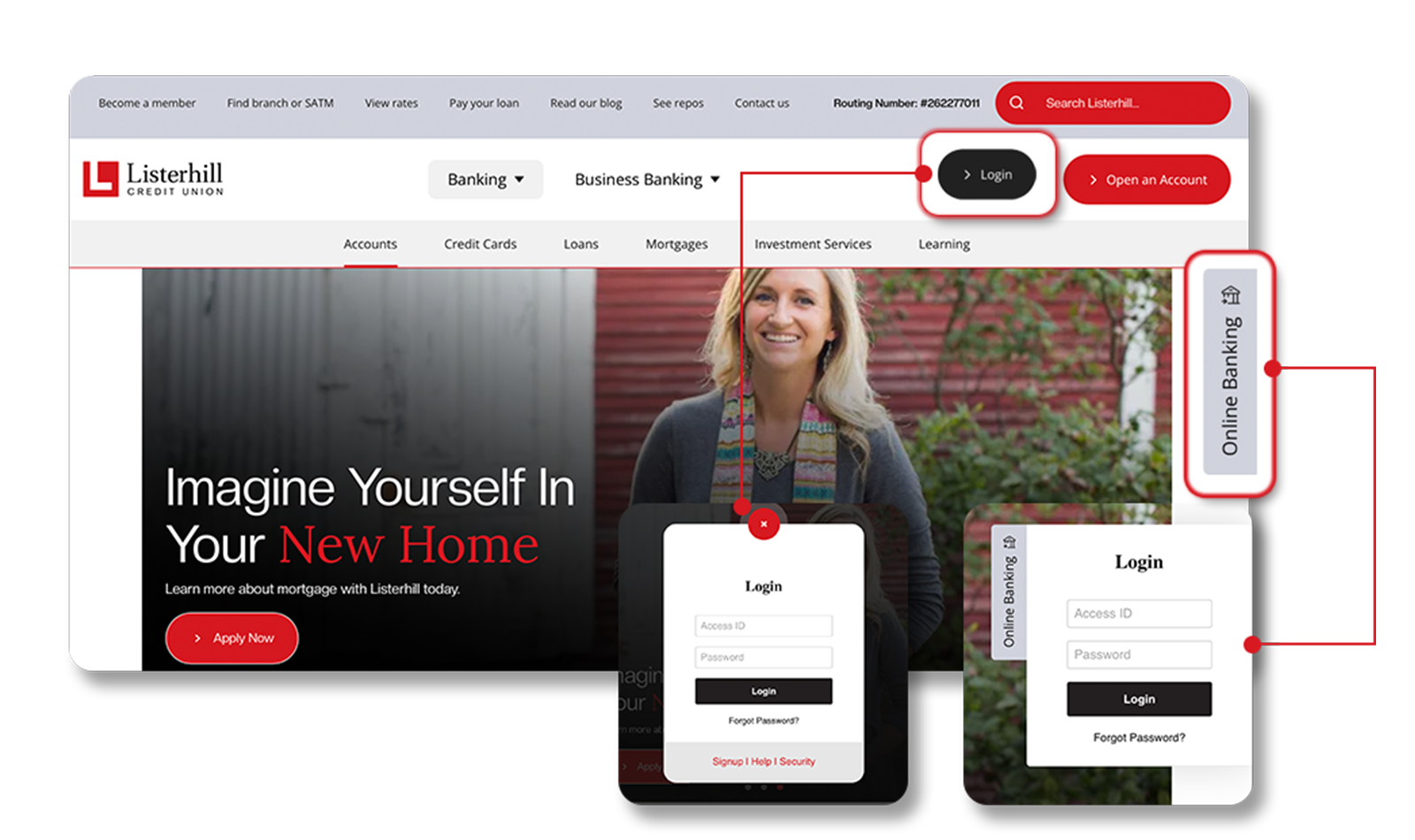
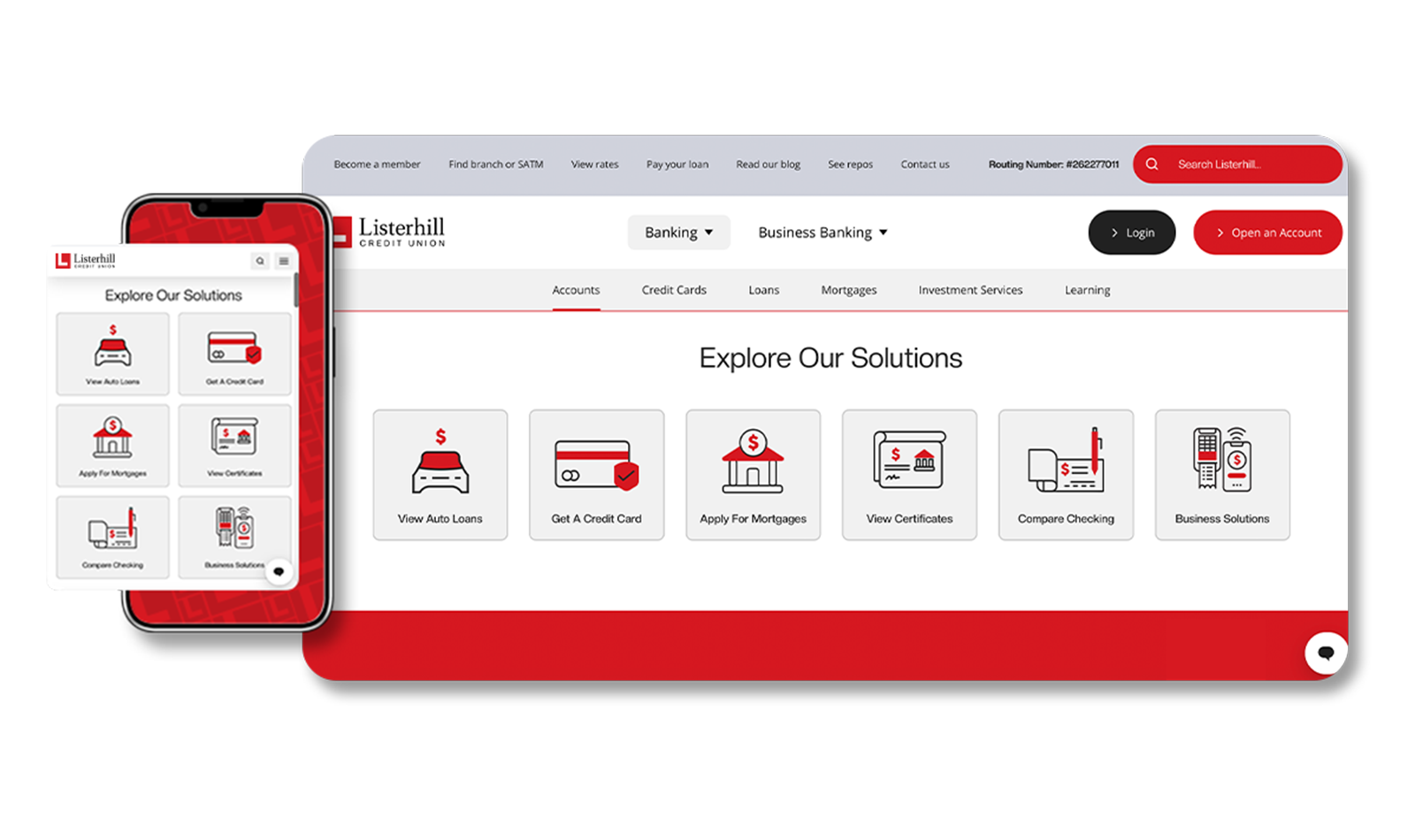
Welcome to Your New Site!
We’ve refreshed our online banking login to make it easier to find — look for it in the sidebar of our new homepage. Don’t worry, your original login option is still there too!
Find Anything, Fast
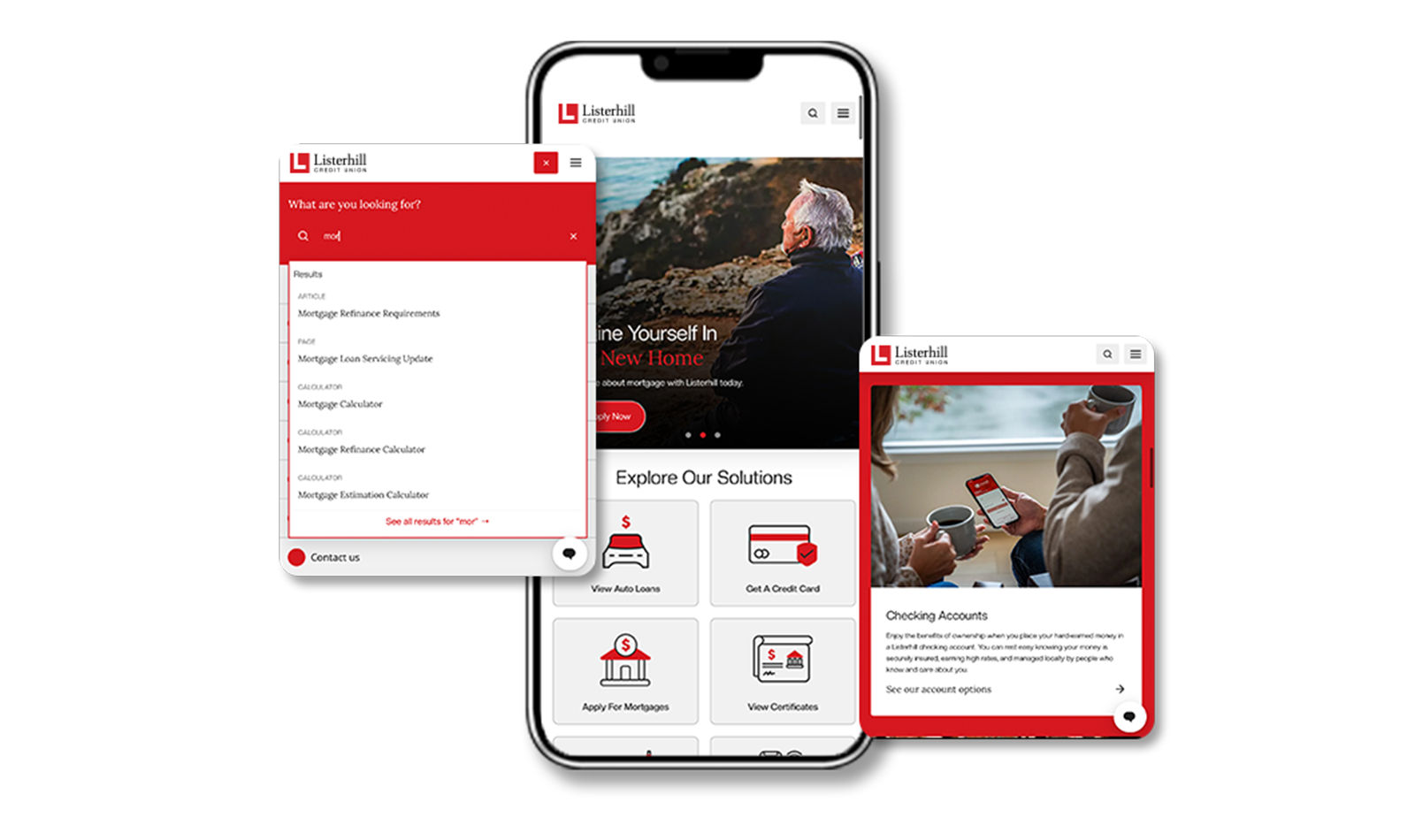
Our new search bar lives right at the top of every page, complete with autocomplete, popular searches, and helpful filters. Finding what you need has never been quicker.
Get There in One Click
Quick-access buttons now sit right below the homepage banner, putting our most popular tools and pages within easy reach — especially on mobile. We’ve also simplified our menus so you can navigate in fewer clicks.
Built for Life on the Go
We’ve optimized every corner of our site for mobile, so banking with us feels smooth and simple wherever you are. Take a look around and see what’s new!
Editorial Note: Articles published are intended to provide general information and educational content related to personal finance, banking, and credit union services. While we strive to ensure the accuracy and reliability of the information presented, it should not be considered as financial advice and may be revised as needed.
Ready to be done with taxes for another year? Hold your horses. Just a few common (and often easy to avoid) tax mistakes cost taxpayers thousands of dollars every year.
Below, we take a look at 10 common errors that can trip you up at filing time. We recommend you take a few minutes to check your return—or double-check any concerns you might have with a tax professional —before you lick the envelope or click submit this year.
Many Happy Returns: 10 Tax Mistakes to Avoid
If you’re scrambling to get your taxes together this year, don’t be too hasty. You don’t want to wind up making a mistake that could delay your tax refund and cost you extra in penalties or additional fees because that will almost certainly mean you’ll need to complete even more paperwork.
Below we look at 10 of the most common tax filing mistakes people make. Whether you complete your return yourself, use tax-preparation software, or hand it over to a registered tax-prep expert—taking the time to double-check that you have avoided the following pitfalls can save you time, money, and a lot of trouble down the road.
1. Not Filing on Time
Failing to file your taxes or apply for an extension by the due date can leave you vulnerable to having to pay interest on missing tax payments. Meeting the deadline seems like such a simple task but you’d be surprised at the number of people who simply miss the relevant filing date.
For most people, the tax return is due by April 15th of the next year. States that have been hit by natural disasters or other disruptions early in the year are sometimes given until June 15th to submit federal and state tax returns where applicable.
2. Incorrect Bank Account Information
Make sure the bank account number and other details you supply with your return are accurate, especially if they have changed. Incorrect or incomplete banking information will delay any refund you are due and may attract the attention of auditors concerned about tax return fraud.
3. Choosing the Wrong Filing Status
How you choose to file your taxes can have a major impact on how much tax you pay. Depending on your personal situation you may choose to file either single, as a couple filing jointly, or as the head of a household.
Each designation offers significant advantages for qualified filers. A married couple, for example, might choose to file separately if one spouse is retired or earns significantly less than the other. On the other hand, a single breadwinner who supports a large family will also usually benefit by filing as the head of a household.
Be sure you choose the most advantageous filing status for your situation. Check with a tax professional if you are unsure.
4. Name Changes and Misspellings
Inaccurate or inconsistent names on your tax return can delay a refund or flag your return for additional attention. Be sure the names you use in every section of your return match your social security number, your W-2 or 1099 tax forms, and your banking details.
Changes like this tend to happen most often after a major life change such as a marriage or a divorce, or if you have chosen to change your legal or commonly used names for any reason.
5. Not Adjusting Your Withholdings
Something to take care of earlier in the year: If your employer withholds tax on your behalf, it’s just as important to keep them updated on changes to your name and your filing status. That will ensure they print the correct name on your W-2 form when they issue it to you.
Potentially more serious, failing to do so may cause your employer to deduct either too much or too little from your paycheck. This can mean they deposit too little (or too much) money in your paycheck each month, which can in turn result in you receiving a smaller refund—or perhaps even owing money—on your taxes.
6. Taking the Standard Deduction
Opting to take the standard deduction because it is simpler rather than choosing to itemize can be a costly mistake if you miss out on valuable deductions. Conversely, choosing to itemize deductions when you would be able to write off more by taking the standard deduction can mean you leave a valuable tax break on the table.
Knowing when to take the standard tax exemption depends on your situation, but it is more likely to make sense if your taxes are relatively straightforward. It makes more sense to itemize if you are a freelancer or run your own business. If you are uncertain, check with a tax professional.
7. Improper Deductions for Business and Charitable Expenses
Claiming deductions you are not eligible for can result in you getting a smaller-than-expected refund or may even cause your return to be flagged for a tax audit. Two areas where tax filers commonly run into trouble are in deducting charitable expenses and in properly claiming business expenses.
Remember that only donations to tax-exempt bodies, typically 501(c)(3) organizations, are deductible. You should also be able to produce the correct receipt detailing the nature and condition of donated goods.
There are specific rules governing what business expenses can be deducted and how they should be calculated. For example, a home office needs to be used primarily as a business workspace. Similar rules cover business travel, catering, and entertainment expenses.
8. Omitting Extra Income
Failing to declare other income you may have received in the course of the year—be it from freelance work, consulting, alimony, or as a result of investments or inheritance—may be a genuine oversight on your part…but it can land you in serious trouble.
If you are audited and are found to have under-declared your income you may be liable for additional tax payments you had not been expecting. In the case of a serious underpayment, you may face additional fines and possibly even criminal prosecution.
9. Forgetting to Include Estimated Tax Payments
If you made an estimated tax payment as part of filing for a tax extension and then forgot or underreported this amount on your final tax return, you might end up being taxed twice on the same income. Take care to record all your payments if you are making quarterly tax payments or multiple payments as part of a tax payment plan.
10. Not Applying Changes to Tax Laws
Recent or even last-minute changes to tax laws may have a major impact on the tax credits you might be eligible for or affect how you claim certain deductions. Be sure to stay up to date on recent or even pending tax changes.
While the Internal Revenue Service (IRS) has said it will ensure taxpayers will be awarded additional credit under laws passed after they file, it’s important to be aware of your full obligations and entitlements under the current law.
Getting Help Filing Your Taxes
Getting everything right is especially important if you complete your tax return by hand. In this case, it’s critical to check the spelling of names and addresses and to confirm your calculations carefully.
Ever-smarter tax return software is becoming available as more people file electronically. The IRS now offers free access to tax preparation software to lower-income filers through its Free File program. These packages will do most or all of the calculations and will populate fields where information is duplicated, which helps to prevent math errors and other mistakes.
Having a trusted person assist you with tax preparation can help you avoid errors. It’s also important to consult with a registered tax professional if you have any questions about how you should file and declare income, the credits you may be eligible for, deductions you should claim, or anything else you’re uncertain about.
Be sure to review your full return with anyone who assists you with it. Not only will you still need to sign it, but you remain personally responsible for ensuring it is indeed accurate and you are personally liable for any errors it may contain.
Listerhill: Your Smart Tax Partner
Tax time is always busy and can be stressful, especially if your tax situation has changed. At Listerhill, we’re always happy to help members make smart, tax-wise decisions about how to manage their money using our full range of personal banking products, from checking accounts to certificates to IRAs.
We're also committed to helping you make sound, informed tax decisions regarding your investments through our team of financial advisors with Listerhill Investment Services.
Contact us or visit a branch today to find out more about how we can help you make the most of your earnings and savings.
Listerhill Credit Union ("Financial Institution") provides referrals to financial professionals of LPL Financial LLC ("LPL") pursuant to an agreement that allows LPL to pay the Financial Institution for these referrals. This creates an incentive for the Financial Institution to make these referrals, resulting in conflict of interest. The Financial Institution is not a current client of LPL for brokerage or advisory services. Please visit https://www.lpl.com/disclosures/is-lpl-relationship-disclosure.html for more detailed information.
Securities and advisory services are offered through LPL Financial (LPL), a registered investment advisor and broker-dealer (member FINRA/SIPC). Insurance products are offered through LPL or its licensed affiliates. Listerhill Credit Union and Listerhill Investment Services are not registered as a broker-dealer or investment advisor. Registered representatives of LPL offer products and services using Listerhill Investment Services, and may also be employees of Listerhill Credit Union or Listerhill Investment Services. These products and services are being offered through LPL or its affiliates, which are separate entities from, and not affiliates of, Listerhill Credit Union or Listerhill Investment Services. Securities and insurance offered through LPL or its affiliates are:
Not Insured by NCUA or Any Other Government Agency
Not Credit Union Guaranteed
Not Credit Union Deposits or Obligation
May Lose Value
The LPL Financial registered representatives associated with this website may discuss and/or transact business only with residents of the states in which they are properly registered or licensed. No offers may be made or accepted from any resident of any other state.
You can apply as a current member or become a member during the application process if you meet eligibility and credit requirements.†
What does 0% APR for 12 months mean?
It means you won't be charged interest on qualifying purchases for the first 12 months after opening your new Listerhill Visa Signature® Rewards, Keystone Signature® Rewards, Visa Platinum®, or Keystone Platinum® credit card.†
How long does the 0% APR last?
This introductory 0% APR offer applies for 12 months from account opening.†
Do current Listerhill credit cardholders qualify?
No; current Listerhill Visa Signature® Rewards, Keystone Signature® Rewards, Visa Platinum®, and Keystone Platinum® credit cardholders are not eligible for this offer, but other promotions may be available.
Who qualifies for the 0% APR for 12 months offer?
This offer is available to new Listerhill Visa Signature® Rewards, Keystone Signature® Rewards, Visa Platinum®, and Keystone Platinum® credit cardholders and is subject to credit approval.‡
This website uses cookies
Our site uses strictly necessary cookies to ensure it works properly. Other optional cookies help us personalize your website experience, improve functionality and content, and identify what might most appeal to you. You can accept or deny optional cookies below. To learn more about how we use cookies and how to manage your browser settings, please see our
Privacy Policy.
Our site uses strictly necessary cookies to ensure it works properly. Other optional cookies help us personalize your website experience, improve functionality and content, and identify what might most appeal to you. You can accept or deny optional cookies below. To learn more about how we use cookies and how to manage your browser settings, please see our
Privacy Policy.
Strictly Necessary
These cookies are essential for you to browse the website and use its features, such as accessing secure areas of the site. Without these cookies, services you have asked for cannot be provided.
Show Cookies
Name: cookie-consent
Provider: Listerhill Credit Union
Expiry: 1 year
Description: Stores your cookie consent preferences.
Name: CraftSessionId
Provider: Listerhill Credit Union
Expiry: Session
Description: Craft CMS session cookie for site functionality.
Name: CRAFT_CSRF_TOKEN
Provider: Listerhill Credit Union
Expiry: Session
Description: Security token to prevent cross-site request forgery.
Name: secure.fx.sid.fxweb
Provider: Apiture (online banking)
Expiry: Session
Description: Session cookie that keeps the online banking login widget signed in while you use it.
Name: XSRF-TOKEN
Provider: Apiture (online banking)
Expiry: 1 day
Description: Protects the online banking login form against cross-site request forgery.
Name: d_id
Provider: Apiture (online banking)
Expiry: 1 year
Description: Device identifier used by online banking to recognize trusted devices at login.
Name: TS*
Provider: Apiture (online banking)
Expiry: Session
Description: Security cookies set by the online banking network protection to detect request tampering.
Name: __cf_bm
Provider: Cloudflare (HubSpot services)
Expiry: 30 minutes
Description: Set by Cloudflare to distinguish real visitors from malicious bots on embedded third-party services. Contains no visitor profile.
Name: site-tour-seen
Provider: Listerhill Credit Union
Expiry: 1 year
Description: Remembers that you have already seen the site tour popup so it is not shown again.
Performance
These cookies collect information about how you use our website, such as which pages you visit most often. This data helps us improve how our website works and understand user behavior. All information is aggregated and anonymous.
Show Cookies
Name: _ga
Provider: Google Analytics
Expiry: 2 years (browsers may cap at 400 days)
Description: Registers a unique ID used to generate statistical data on how the visitor uses the website.
Name: _ga_*
Provider: Google Analytics
Expiry: 2 years (browsers may cap at 400 days)
Description: Used by Google Analytics to collect data on the number of times a user has visited the website.
Name: _gid
Provider: Google Analytics
Expiry: 24 hours
Description: Registers a unique ID used to generate statistical data on how the visitor uses the website.
Name: _gat
Provider: Google Tag Manager
Expiry: 1 minute
Description: Used by Google Tag Manager to throttle request rate.
Name: __hstc
Provider: HubSpot
Expiry: 6 months
Description: Main cookie for tracking visitors.
Name: __hssc
Provider: HubSpot
Expiry: 30 minutes
Description: Keeps track of sessions.
Name: __hssrc
Provider: HubSpot
Expiry: Session
Description: Determines if visitor restarted their browser.
Name: hubspotutk
Provider: HubSpot
Expiry: 6 months
Description: Tracks visitor identity for form submissions.
Name: _ALGOLIA
Provider: Algolia
Expiry: 6 months
Description: Anonymous visitor token used by our site search (Algolia) to measure search usage and personalize results.
Name: _hjSessionUser_*
Provider: Hotjar
Expiry: 1 year
Description: Identifies a returning visitor to Hotjar so site usage can be measured across visits.
Name: _hjSession_*
Provider: Hotjar
Expiry: 30 minutes
Description: Holds the current Hotjar session so interactions on a visit can be grouped together.
Name: _hjCookieTest
Provider: Hotjar
Expiry: Session
Description: Temporary cookie used to check whether the browser accepts cookies. Contains no personal data.
Marketing
These cookies are used to deliver content and advertisements more relevant to you and your interests. They may also be used to limit the number of times you see an advertisement and measure the effectiveness of advertising campaigns.
Show Cookies
Name: om-*
Provider: OptinMonster
Expiry: 1 year
Description: Used by OptinMonster to track campaign interactions and display relevant offers.
Name: _omappvs
Provider: OptinMonster
Expiry: Session
Description: Used by OptinMonster to determine new vs. returning visitors.
Name: _omappvp
Provider: OptinMonster
Expiry: 11 years (browsers may cap at 400 days)
Description: Used by OptinMonster to track campaign views and conversions.
Name: _fbp
Provider: Facebook/Meta
Expiry: 3 months
Description: Identifies visitors for personalized advertising.
Name: lastExternalReferrer
Provider: Facebook/Meta
Expiry: Session
Description: Records how the user reached the website.
Name: lastExternalReferrerTime
Provider: Facebook/Meta
Expiry: Session
Description: Records when the user reached the website.
Name: __spdt
Provider: Spotify Ad Analytics
Expiry: 1 year
Description: Used by Spotify Ad Analytics to measure the effectiveness of audio advertising campaigns.
Name: __arank_duid
Provider: Alpharank
Expiry: 13 months
Description: Device identifier used by Alpharank to measure marketing campaign performance.
Name: cookietest
Provider: Alpharank
Expiry: Session
Description: Temporary cookie used to check whether the browser accepts cookies. Contains no personal data.
Name: sa-user-id
Provider: StackAdapt (El Toro advertising)
Expiry: 1 year
Description: Identifies your browser to our advertising vendor so ad performance can be measured.
Name: sa-user-id-v2
Provider: StackAdapt (El Toro advertising)
Expiry: 1 year
Description: Identifies your browser to our advertising vendor so ad performance can be measured.
Name: sa-user-id-v3
Provider: StackAdapt (El Toro advertising)
Expiry: 1 year
Description: Identifies your browser to our advertising vendor so ad performance can be measured.
Name: sa-user-id-v4
Provider: StackAdapt (El Toro advertising)
Expiry: 1 year
Description: Identifies your browser to our advertising vendor so ad performance can be measured.
Name: sa-u-*
Provider: StackAdapt (El Toro advertising)
Expiry: 30 days
Description: Records the traffic source that brought you to the site for ad attribution.
Name: sa-r-*
Provider: StackAdapt (El Toro advertising)
Expiry: 30 days
Description: Records the referring site for ad attribution.
Name: samp-*
Provider: StackAdapt (El Toro advertising)
Expiry: 90 days
Description: Records the ad campaign that brought you to the site so conversions can be attributed to it.
Name: TDID
Provider: The Trade Desk (Brandzooka advertising)
Expiry: 1 year
Description: Identifies your browser to our advertising vendor so ad performance can be measured.
Name: TDCPM
Provider: The Trade Desk (Brandzooka advertising)
Expiry: 1 year
Description: Stores advertising campaign data used to measure ad performance.
Name: TTDOptOut
Provider: The Trade Desk (Brandzooka advertising)
Expiry: 1 year
Description: Records that you have opted out of interest-based advertising from this vendor.
Name: member
Provider: Listerhill Credit Union
Expiry: 360 days
Description: Marks your browser as a member so marketing and site content can be tailored to members.
Name: fr
Provider: Facebook/Meta
Expiry: 3 months
Description: Third-party Meta cookie used to deliver and measure personalized advertising.
Functionality
These cookies allow our website to remember choices you make and provide enhanced, more personal features. They may be used to provide services you have requested such as live chat support and interactive maps.
Show Cookies
Name: NID
Provider: Google Maps
Expiry: 6 months
Description: Used by Google Maps to store user preferences and information.
Name: visitor_session
Provider: Glia
Expiry: 1 year
Description: Used by Glia live chat to recognize your browser across visits so chat sessions and history can be maintained.
Name: visitor_session_partitioned
Provider: Glia
Expiry: 1 year
Description: Partitioned copy of the Glia visitor session cookie for browsers with third-party cookie protections.
Name: incompat_visitor_session
Provider: Glia
Expiry: 1 year
Description: Fallback copy of the Glia visitor session cookie for browsers without partitioned cookie support.