Please login to Online Banking to apply. If you do not have Online Banking, please click here to apply.
Not a member yet?
Listerhill Credit Union is a nonprofit financial cooperative improving lives in our community.
If you live in Alabama, Georgia, Mississippi, Florida, or Tennessee, you are eligible to become a member. Depending on your individual eligibility, we may require membership into an approved association at no cost to you.
You can also qualify for membership by being a family member of a current or potential Listerhill member.
With only $5, you can join Listerhill today and start taking advantage of a lifetime membership.
By clicking "Continue," you will leave Listerhill's website and enter a website hosted by a third party. Please be aware that this external website is not operated by Listerhill Credit Union. We are not responsible for the content, availability or the security of this linked site, and our privacy policies do not apply. We encourage you to review the privacy and security policies of the site you are visiting.
Welcome to Your New Site!
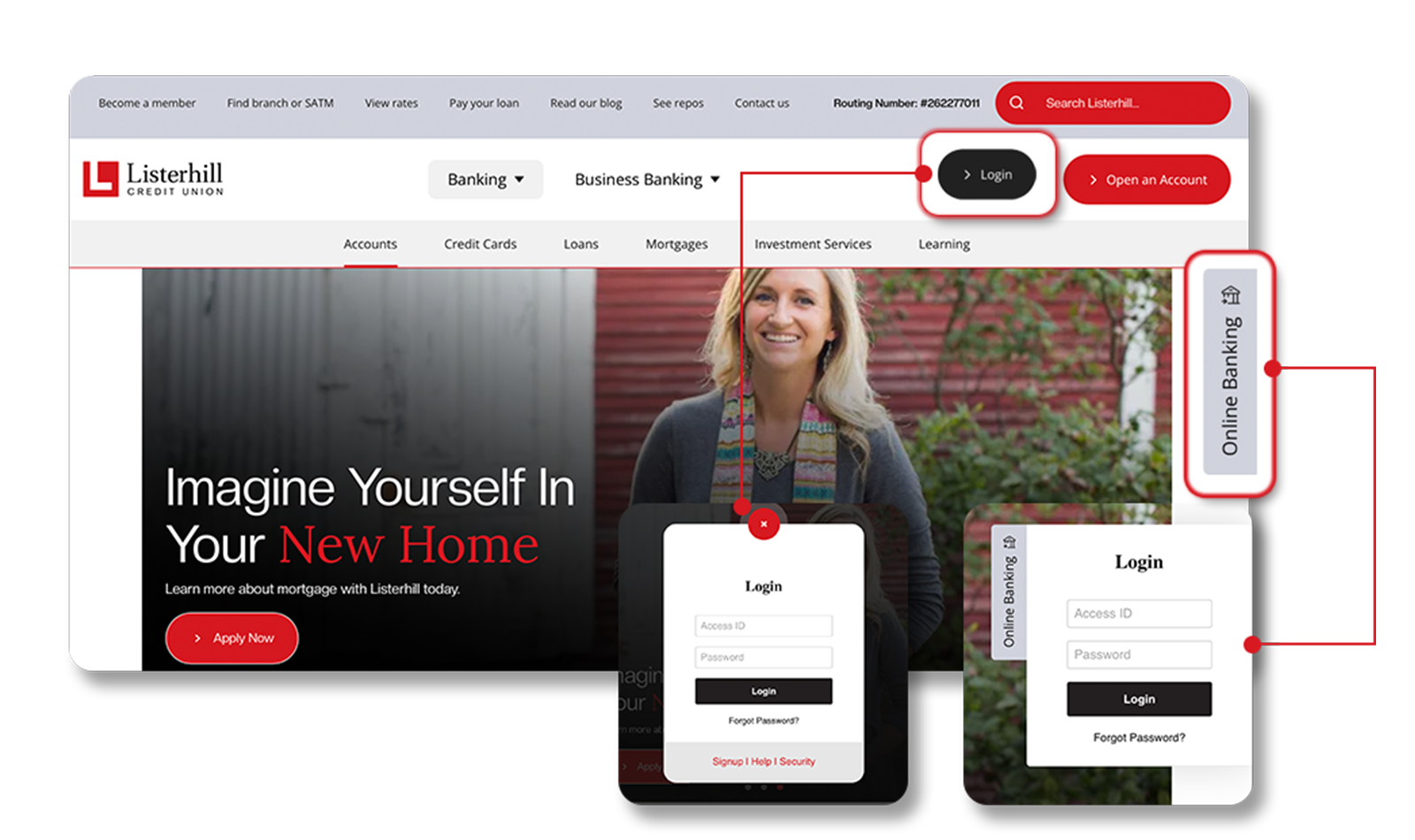
We’ve refreshed our online banking login to make it easier to find — look for it in the sidebar of our new homepage. Don’t worry, your original login option is still there too!
Find Anything, Fast
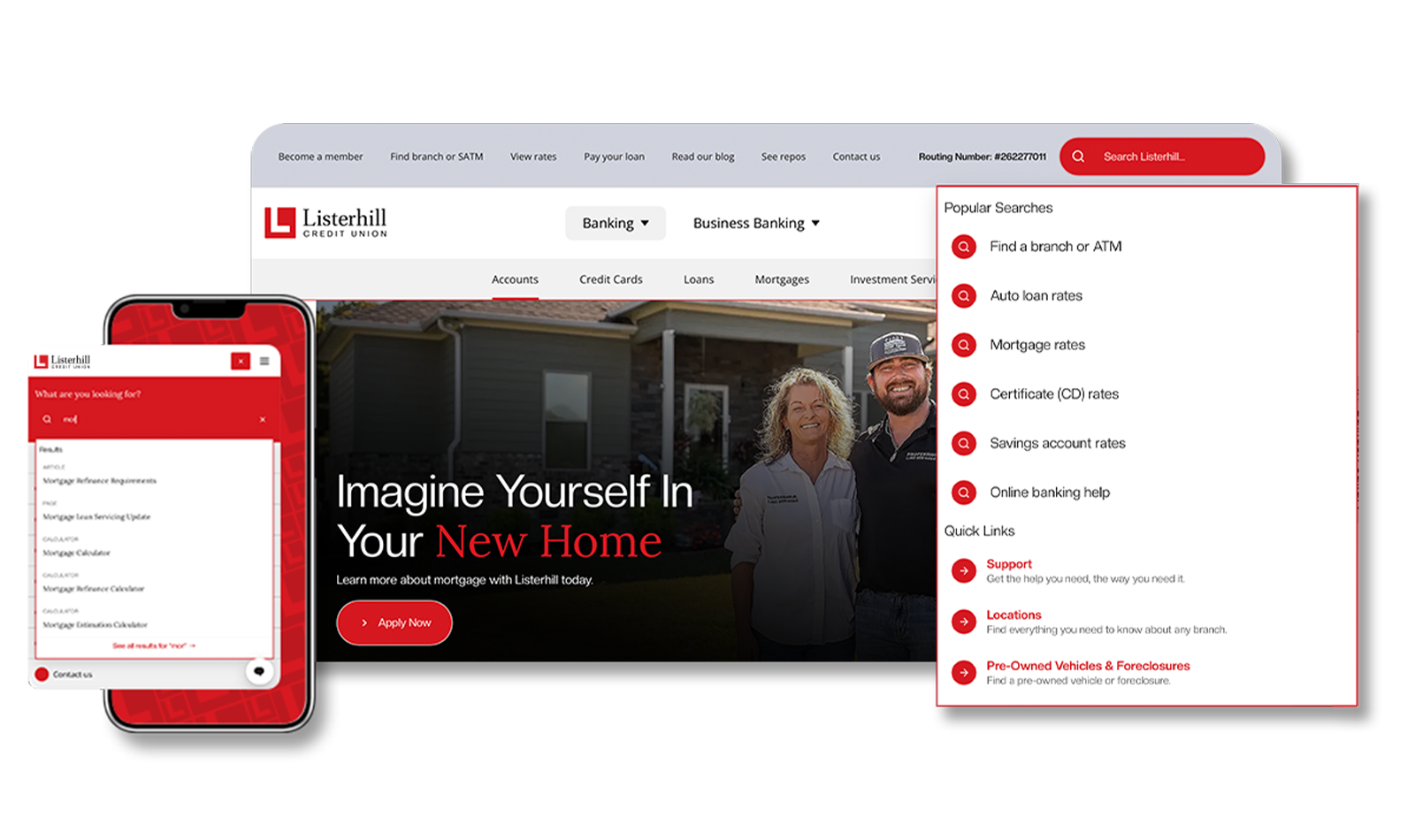
Our new search bar lives right at the top of every page, complete with autocomplete, popular searches, and helpful filters. Finding what you need has never been quicker.
Get There in One Click
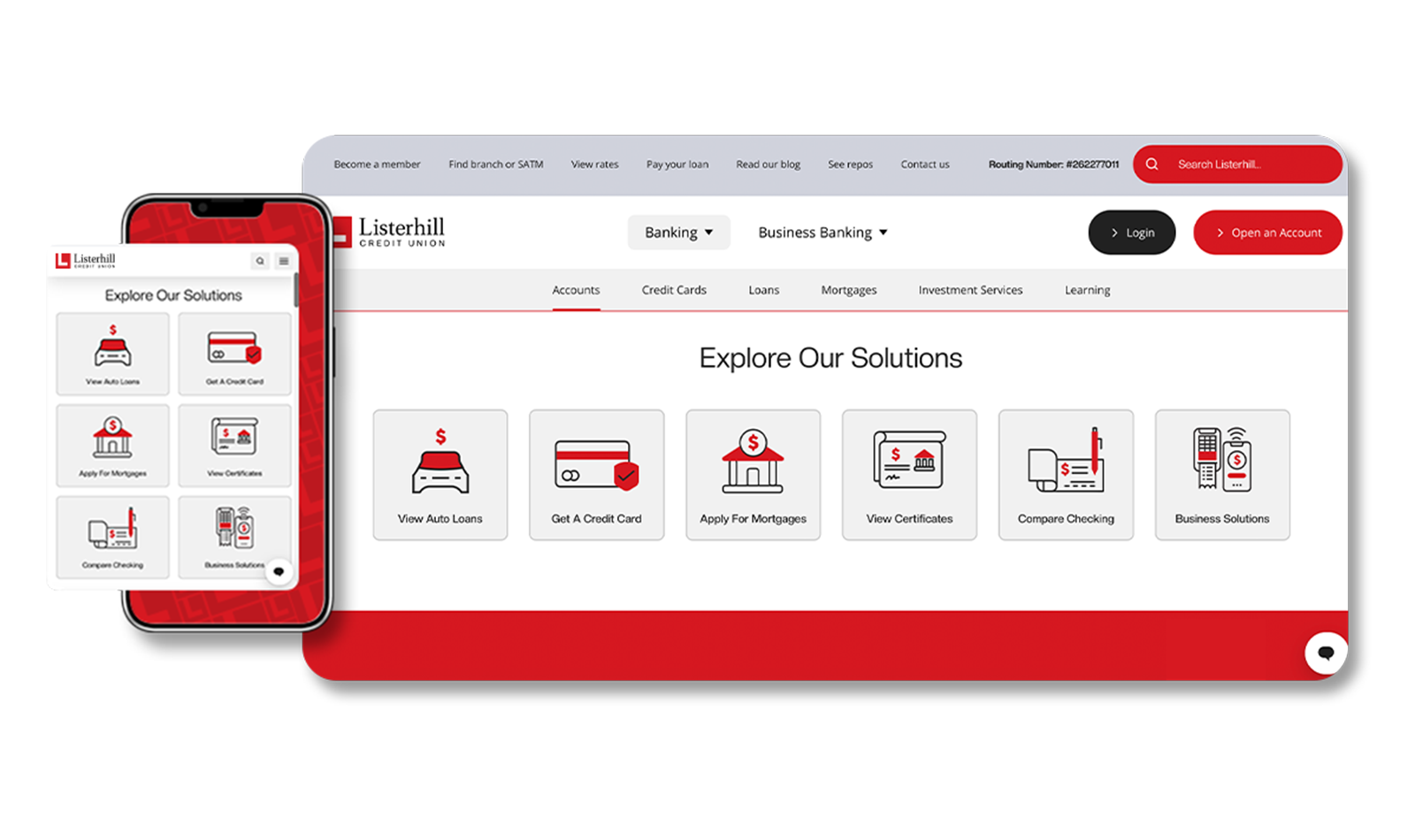
Quick-access buttons now sit right below the homepage banner, putting our most popular tools and pages within easy reach — especially on mobile. We’ve also simplified our menus so you can navigate in fewer clicks.
Built for Life on the Go
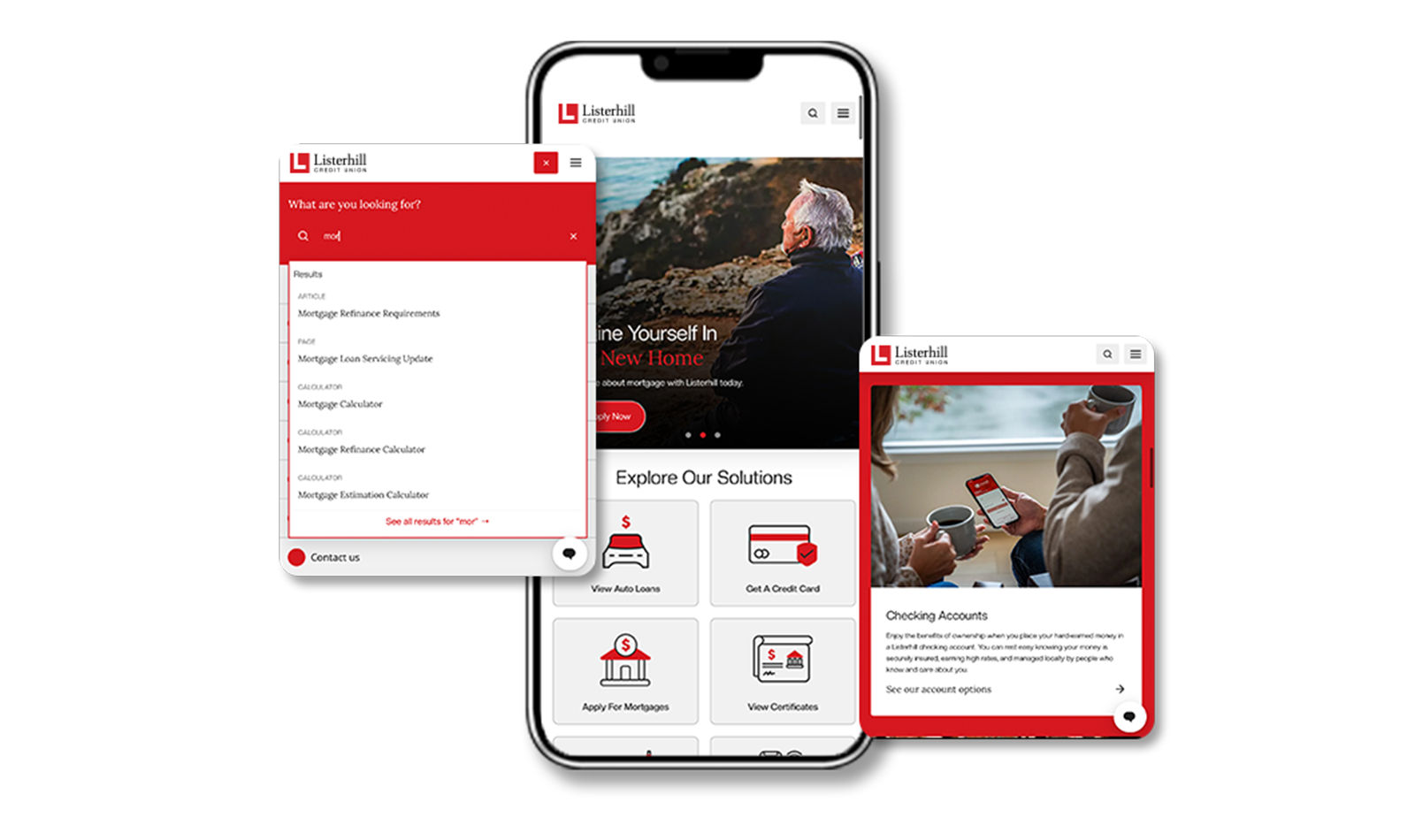
We’ve optimized every corner of our site for mobile, so banking with us feels smooth and simple wherever you are. Take a look around and see what’s new!
Editorial Note: Articles published are intended to provide general information and educational content related to personal finance, banking, and credit union services. While we strive to ensure the accuracy and reliability of the information presented, it should not be considered as financial advice and may be revised as needed.
Scams Are on the Rise - and Older Adults Are Prime Targets
Older Americans are facing a rising wave of fraud. In 2024 alone, Americans reported $12.5 billion in losses due to scams, a 25% increase over 2023's total of $10 billion.
Older Americans are facing a rising wave of fraud. In 2024 alone, Americans reported $12.5 billion in losses due to scams, a 25% increase over 2023's total of $10 billion.
Seniors in particular are disproportionately affected:
People in their 60s lost $324 million
Those in their 70s lost $240 million
People aged 80 and older lost $86 million
In 2024, the FBI's Internet Crime Complaint Center (IC3) received over 147,000 elder fraud complaints, totaling $4.9 billion in losses - a 43% increase from the year before. Financial exploitation is one of the most common forms of elder abuse - and it's often underreported.
Older adults are frequently targeted because they often:
Own their homes or have substantial retirement savings
Live alone or experience social isolation
Tend to be trusting and polite on the phone
Aren't always up to date on the latest scam tactics
Whether it's a fraudulent sweepstakes or a fake contractor, the emotional and financial toll can be devastating. Let's walk through the most common scams to watch for - and how to respond safely.
"You Need a New Roof" (Home Repair Scams)
A "contractor" appears uninvited at your home, claiming urgent repairs are needed - often offering a senior discount or free inspection. They may pressure you to agree on the spot, pay in advance, or raise costs mid-job for substandard or unnecessary work.
Never feel pressured to agree right away. Always ask for a contractor's license, verify their credentials with your state's licensing board, and always get multiple estimates before hiring anyone.
Predatory Loan Offers
Fraudsters often exploit financial stress, promising quick loans for repairs, taxes, or medical bills - with predatory terms. Be wary of offers that don't require a credit check, expire quickly, require upfront payments for "processing", or come with high fees and outrageous interest rates.
According to the FTC, imposter scams and fraudulent financial services are among the top scams affecting older Americans in 2024. Remember, reputable lenders never solicit door-to-door or by phone. Never feel rushed into a financial decision.
"We Can Fix Your Bad Credit"
Some scammers claim they can remove negative items from your credit report - for a hefty fee. Remember, no one can legally erase accurate credit history. Building better credit takes time, responsible borrowing, and consistent repayment. Review your credit report at AnnualCreditReport.com and dispute only inaccurate information.
"You've won!" - but only if you first pay shipping, taxes, or other fees. In reality, you never have to pay to claim a legitimate prize. Seniors are three times more likely than younger people to report losing money to sweepstakes scams. The median report loss? Over $1,000.
If you receive a suspicious or unexpected contest or prize offer, it's probably best to throw it away, block the number, and report the incident to ReportFraud.ftc.gov.
Recovery Scams
Scammers often prey on people who have already been defrauded. They may pose as law enforcement or "recovery experts" offering to help - for a fee. If you're asked to wire money to recover losses, it's likely another scam - possibly by the same people who scammed you the first time.
Real government agencies like the FBI or FTC will never ask for money to investigate or recover funds.
"Let Me Help You Pay Your Bills"
When someone you trust - like a friend, family member, or caregiver - offers to help with your finances, it often comes from a place of care. However, well-meaning arrangements can open the door to financial harm if boundaries aren't clear.
As an example, joint accounts give full access to your funds, including the ability to withdraw money or inherit your account. While most people would never misuse this trust, it's important to understand the risks - because abuse by trusted individuals does happen.
As an alternative, talk to your credit union or bank about safer options like assigning limited access, setting up alerts, or naming a trusted contact. These options allow you to get help without giving up control of your finances.
Protect yourself by avoiding any pressure to act immediately, never share sensitive personal or financial information, and consulting your attorney or trusted advisor for financial planning needs.
How Families & Caregivers Can Help
Talk regularly about potential scams or strange phone calls.
Set up account alerts to monitor for unusual activity.
Stay informed about current scam tactics via resources like the FTC or AARP Fraud Watch.
Encourage openness by reminding loved ones it's not embarrassing to ask for help.
How Listerhill Credit Union Helps Protect Its Members
At Listerhill, protecting our members - especially older adults - is part of our mission.
Here's how we help safeguard your financial wellbeing:
Live local support: No robocalls or aggressive sales tactics - just friendly, local professionals you can trust
Real-time fraud alerts: We notify you of suspicious activity right away
Account protections: Ask about features like transaction alerts, view-only access for caregivers, or spending limits
Educational resources: We regularly share updates, tips, and tools to help members recognize fraud early
Whether you're managing your finances or helping a loved one, we're here to help every step of the way.
Change your passwords and monitor your accounts for suspicious activity.
Final Thoughts: Stay Aware, Stay Safe
Financial scams are becoming more sophisticated - but so are tools to fight them. By staying informed and connected, you can help protect yourself or someone you care about from serious loss.
You can apply as a current member or become a member during the application process if you meet eligibility and credit requirements.†
What does 0% APR for 12 months mean?
It means you won't be charged interest on qualifying purchases for the first 12 months after opening your new Listerhill Visa Signature® Rewards, Keystone Signature® Rewards, Visa Platinum®, or Keystone Platinum® credit card.†
How long does the 0% APR last?
This introductory 0% APR offer applies for 12 months from account opening.†
Do current Listerhill credit cardholders qualify?
No; current Listerhill Visa Signature® Rewards, Keystone Signature® Rewards, Visa Platinum®, and Keystone Platinum® credit cardholders are not eligible for this offer, but other promotions may be available.
Who qualifies for the 0% APR for 12 months offer?
This offer is available to new Listerhill Visa Signature® Rewards, Keystone Signature® Rewards, Visa Platinum®, and Keystone Platinum® credit cardholders and is subject to credit approval.‡
This website uses cookies
Our site uses strictly necessary cookies to ensure it works properly. Other optional cookies help us personalize your website experience, improve functionality and content, and identify what might most appeal to you. You can accept or deny optional cookies below. To learn more about how we use cookies and how to manage your browser settings, please see our
Privacy Policy.
Our site uses strictly necessary cookies to ensure it works properly. Other optional cookies help us personalize your website experience, improve functionality and content, and identify what might most appeal to you. You can accept or deny optional cookies below. To learn more about how we use cookies and how to manage your browser settings, please see our
Privacy Policy.
Strictly Necessary
These cookies are essential for you to browse the website and use its features, such as accessing secure areas of the site. Without these cookies, services you have asked for cannot be provided.
Show Cookies
Name: cookie-consent
Provider: Listerhill Credit Union
Expiry: 1 year
Description: Stores your cookie consent preferences.
Name: CraftSessionId
Provider: Listerhill Credit Union
Expiry: Session
Description: Craft CMS session cookie for site functionality.
Name: CRAFT_CSRF_TOKEN
Provider: Listerhill Credit Union
Expiry: Session
Description: Security token to prevent cross-site request forgery.
Name: secure.fx.sid.fxweb
Provider: Apiture (online banking)
Expiry: Session
Description: Session cookie that keeps the online banking login widget signed in while you use it.
Name: XSRF-TOKEN
Provider: Apiture (online banking)
Expiry: 1 day
Description: Protects the online banking login form against cross-site request forgery.
Name: d_id
Provider: Apiture (online banking)
Expiry: 1 year
Description: Device identifier used by online banking to recognize trusted devices at login.
Name: TS*
Provider: Apiture (online banking)
Expiry: Session
Description: Security cookies set by the online banking network protection to detect request tampering.
Name: __cf_bm
Provider: Cloudflare (HubSpot services)
Expiry: 30 minutes
Description: Set by Cloudflare to distinguish real visitors from malicious bots on embedded third-party services. Contains no visitor profile.
Name: site-tour-seen
Provider: Listerhill Credit Union
Expiry: 1 year
Description: Remembers that you have already seen the site tour popup so it is not shown again.
Performance
These cookies collect information about how you use our website, such as which pages you visit most often. This data helps us improve how our website works and understand user behavior. All information is aggregated and anonymous.
Show Cookies
Name: _ga
Provider: Google Analytics
Expiry: 2 years (browsers may cap at 400 days)
Description: Registers a unique ID used to generate statistical data on how the visitor uses the website.
Name: _ga_*
Provider: Google Analytics
Expiry: 2 years (browsers may cap at 400 days)
Description: Used by Google Analytics to collect data on the number of times a user has visited the website.
Name: _gid
Provider: Google Analytics
Expiry: 24 hours
Description: Registers a unique ID used to generate statistical data on how the visitor uses the website.
Name: _gat
Provider: Google Tag Manager
Expiry: 1 minute
Description: Used by Google Tag Manager to throttle request rate.
Name: __hstc
Provider: HubSpot
Expiry: 6 months
Description: Main cookie for tracking visitors.
Name: __hssc
Provider: HubSpot
Expiry: 30 minutes
Description: Keeps track of sessions.
Name: __hssrc
Provider: HubSpot
Expiry: Session
Description: Determines if visitor restarted their browser.
Name: hubspotutk
Provider: HubSpot
Expiry: 6 months
Description: Tracks visitor identity for form submissions.
Name: _ALGOLIA
Provider: Algolia
Expiry: 6 months
Description: Anonymous visitor token used by our site search (Algolia) to measure search usage and personalize results.
Name: _hjSessionUser_*
Provider: Hotjar
Expiry: 1 year
Description: Identifies a returning visitor to Hotjar so site usage can be measured across visits.
Name: _hjSession_*
Provider: Hotjar
Expiry: 30 minutes
Description: Holds the current Hotjar session so interactions on a visit can be grouped together.
Name: _hjCookieTest
Provider: Hotjar
Expiry: Session
Description: Temporary cookie used to check whether the browser accepts cookies. Contains no personal data.
Marketing
These cookies are used to deliver content and advertisements more relevant to you and your interests. They may also be used to limit the number of times you see an advertisement and measure the effectiveness of advertising campaigns.
Show Cookies
Name: om-*
Provider: OptinMonster
Expiry: 1 year
Description: Used by OptinMonster to track campaign interactions and display relevant offers.
Name: _omappvs
Provider: OptinMonster
Expiry: Session
Description: Used by OptinMonster to determine new vs. returning visitors.
Name: _omappvp
Provider: OptinMonster
Expiry: 11 years (browsers may cap at 400 days)
Description: Used by OptinMonster to track campaign views and conversions.
Name: _fbp
Provider: Facebook/Meta
Expiry: 3 months
Description: Identifies visitors for personalized advertising.
Name: lastExternalReferrer
Provider: Facebook/Meta
Expiry: Session
Description: Records how the user reached the website.
Name: lastExternalReferrerTime
Provider: Facebook/Meta
Expiry: Session
Description: Records when the user reached the website.
Name: __spdt
Provider: Spotify Ad Analytics
Expiry: 1 year
Description: Used by Spotify Ad Analytics to measure the effectiveness of audio advertising campaigns.
Name: __arank_duid
Provider: Alpharank
Expiry: 13 months
Description: Device identifier used by Alpharank to measure marketing campaign performance.
Name: cookietest
Provider: Alpharank
Expiry: Session
Description: Temporary cookie used to check whether the browser accepts cookies. Contains no personal data.
Name: sa-user-id
Provider: StackAdapt (El Toro advertising)
Expiry: 1 year
Description: Identifies your browser to our advertising vendor so ad performance can be measured.
Name: sa-user-id-v2
Provider: StackAdapt (El Toro advertising)
Expiry: 1 year
Description: Identifies your browser to our advertising vendor so ad performance can be measured.
Name: sa-user-id-v3
Provider: StackAdapt (El Toro advertising)
Expiry: 1 year
Description: Identifies your browser to our advertising vendor so ad performance can be measured.
Name: sa-user-id-v4
Provider: StackAdapt (El Toro advertising)
Expiry: 1 year
Description: Identifies your browser to our advertising vendor so ad performance can be measured.
Name: sa-u-*
Provider: StackAdapt (El Toro advertising)
Expiry: 30 days
Description: Records the traffic source that brought you to the site for ad attribution.
Name: sa-r-*
Provider: StackAdapt (El Toro advertising)
Expiry: 30 days
Description: Records the referring site for ad attribution.
Name: samp-*
Provider: StackAdapt (El Toro advertising)
Expiry: 90 days
Description: Records the ad campaign that brought you to the site so conversions can be attributed to it.
Name: TDID
Provider: The Trade Desk (Brandzooka advertising)
Expiry: 1 year
Description: Identifies your browser to our advertising vendor so ad performance can be measured.
Name: TDCPM
Provider: The Trade Desk (Brandzooka advertising)
Expiry: 1 year
Description: Stores advertising campaign data used to measure ad performance.
Name: TTDOptOut
Provider: The Trade Desk (Brandzooka advertising)
Expiry: 1 year
Description: Records that you have opted out of interest-based advertising from this vendor.
Name: member
Provider: Listerhill Credit Union
Expiry: 360 days
Description: Marks your browser as a member so marketing and site content can be tailored to members.
Name: fr
Provider: Facebook/Meta
Expiry: 3 months
Description: Third-party Meta cookie used to deliver and measure personalized advertising.
Functionality
These cookies allow our website to remember choices you make and provide enhanced, more personal features. They may be used to provide services you have requested such as live chat support and interactive maps.
Show Cookies
Name: NID
Provider: Google Maps
Expiry: 6 months
Description: Used by Google Maps to store user preferences and information.
Name: visitor_session
Provider: Glia
Expiry: 1 year
Description: Used by Glia live chat to recognize your browser across visits so chat sessions and history can be maintained.
Name: visitor_session_partitioned
Provider: Glia
Expiry: 1 year
Description: Partitioned copy of the Glia visitor session cookie for browsers with third-party cookie protections.
Name: incompat_visitor_session
Provider: Glia
Expiry: 1 year
Description: Fallback copy of the Glia visitor session cookie for browsers without partitioned cookie support.